Small but important changes to the 2026 CNRS CR interview modalities
For candidates invited to the CNRS Chargé·e de recherche (CRCN) auditions in Section 19, March is an intense month. The interview stage is where months of preparation culminate in a short presentation and discussion with the selection committee.
If you read our article last year on the audition process, you may remember the overall structure: a 25-minute audition including a 12-minute presentation, followed by questions from the jury. That fundamental structure has not changed in 2026.
However, several practical aspects of the auditions have changed this year, and they are important enough that candidates should take note early. These changes concern how presentation slides are submitted, file size limits, and arrival logistics on the day of the audition.
In this article we summarize the most relevant updates for candidates auditioning for the CNRS concours 2026.
A reminder of the basic format
The overall format of the audition remains the same as in previous years:
- Total audition time: 25 minutes
- Presentation: 12 minutes
- Questions by the jury: 13 minutes
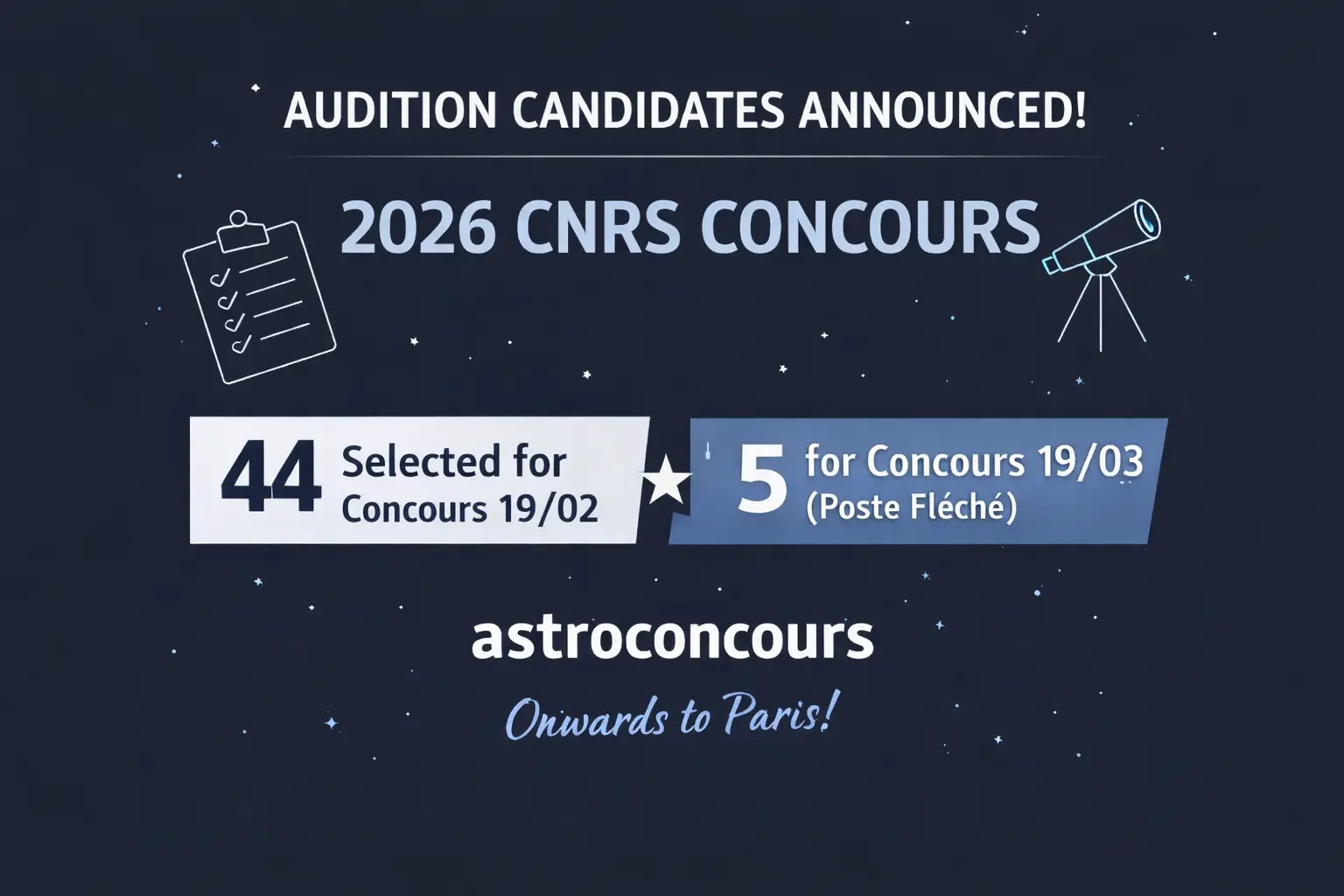
The auditions for Section 19 will take place 23–27 March 2026 for the 5 open posts, and on 27 March 2026 for the one poste fleché, all in the same room at the Observatoire de Paris.
Some candidates may be authorized to complete the audition remotely using an online conferencing tool. This only applies to candidates who are unable to travel to Paris due to exceptional circumstances, such as visa constraints, health issues, pregnancy, or long distance travel. In these cases, the audition format remains the same: the candidate still has 25 minutes in total, including a 12-minute presentation followed by 13 minutes of questions from the jury. The main difference is that the presentation is delivered via screen sharing rather than from the lecture room.
A request for remote audition must be made well in advance, and the candidate must provide a valid justification for why they cannot attend in person.
The Section 19 concours information page provides more details on the process for requesting a remote audition.
While the format itself has remained stable, several logistical details have changed compared to last year.
Slides must now be uploaded a week before the audition
One of the most noticeable changes concerns when candidates submit their presentation slides.
In 2026, all candidates have the same presentation upload deadline, rather than having to send them the evening before their respective interview. We presume this is to ensure that all candidates have the same amount of time to prepare their final slides.
Candidates must upload presentation no later than Friday 20 March at 18:00.
This file is the one that will be used during the audition, meaning candidates will not be able to modify their slides afterward.
Increased file size limit
Another small but welcome change concerns the maximum file size for slides.
For the CRCN auditions, the Section specifies that the uploaded file must not exceed 15 MB.
While still modest by modern standards, this limit is larger than the 3.5 MB limit until last year, which often forced candidates to aggressively compress figures and other presentation components.
This is a particularly useful change because presentations often contain:
- high resolution plots
- detailed observational images
- simulation visualisations
That said, 15 MB can still be reached surprisingly quickly, so it remains wise to optimize images and avoid unnecessarily large embedded figures.
Slides are transferred via ZendTo
The way slides are sent has also changed. Instead of emailing the file (which was likely the reason for the previously ridiculously small file size limits), candidates must now use the ZendTo file transfer service of Paris Observatory.
Make sure to follow the Section 19 instructions:
- Name the file
lastname_firstname_concours.pdf - Upload the file to the ZendTo platform
- Specify the recipient email as listed on the Section 19 concours information page
This system is commonly used for large file transfers in research environments and should work smoothly, but it is worth testing the upload well before the deadline instead of waiting for the last minute.
Candidates are asked to arrive only 15 minutes before
Another small but notable change concerns arrival time on the day of the audition.
Candidates are now asked to arrive 15 minutes before their scheduled time, rather than the 30 minutes that were commonly requested in previous years. Considering we heard some feedback last year how it can be very awkward to be sitting around for a long time before your audition, this feels like a reasonable change. In particular because if you arrived even earlier than with 30 minutes to spare, you would often hang out with the person being interviewed right before you.
Final thoughts
The CNRS concours auditions are always intense, but they are also an opportunity to present your work to a panel of colleagues who care deeply about the field. In the same way as we heard last year that the auditions are a unique experience, we also heard that the jury members are generally very supportive, try to create a positive atmosphere, and show genuine interest in the candidates’ research.
Understanding the practical details of the audition process ahead of time helps remove unnecessary stress and lets you focus on what truly matters: communicating your research clearly and convincingly.
If you are preparing your talk right now, good luck - and remember that almost every candidate feels the same mix of excitement and anxiety before stepping into that room.
Links:
- CNRS section 19 2026 concours information page: https://section19.obspm.fr/concours/#2026
- Audition calendar for concours 19/02 (5 positions): https://sdrive.cnrs.fr/s/2cJBE5QwmEHEKHe?dir=/&editing=false&openfile=true
- Audition calendar for concours 19/03 (1 poste fleché): https://sdrive.cnrs.fr/s/a24MeXPYqeiWaWm?dir=/&editing=false&openfile=true